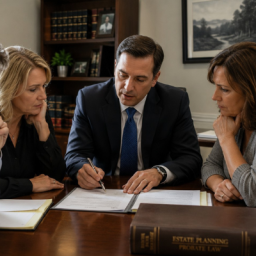
The administration of an estate is meant to honor a loved one’s final wishes. Yet, even in close families, misunderstandings can surface. Questions about fairness. Concerns about intent. Uncertainty about legal language. These moments often evolve into serious estate disputes.
When that happens, families must decide how to resolve the matter. Should they go to court for probate litigation, or should they think about Alternative Dispute Resolution as a better option? The decision will have long-lasting effects. It affects money, schedules, privacy, and, most importantly, family relationships.
Families can find a way to settle estate disputes that works for them and their legal needs if they know about both paths.
What Is Alternative Dispute Resolution in Estate Matters?
Not every estate dispute needs to end up in front of a judge. Alternative Dispute Resolution offers a structured, more collaborative path forward — one that’s widely used in probate cases where beneficiaries or fiduciaries disagree over how an estate is being handled and where preserving relationships matters as much as resolving the dispute.
Core Forms of ADR in Estate Cases
Estate mediation brings in a neutral, experienced professional whose job isn’t to decide who’s right; it’s to create an environment where real, productive conversation can actually happen. For parties who’ve reached an impasse, that kind of structured guidance can make all the difference.
- Arbitration for probate conflicts allows a neutral decision-maker to review evidence and issue a binding or advisory decision.
- Negotiation in estate cases occurs when attorneys work directly to reach an agreement.
- These approaches form the foundation of the estate mediation process and often lead to an out-of-court estate settlement.
Key Characteristics of ADR
- Focus on dialogue rather than confrontation
- Greater flexibility in scheduling and structure
- Confidential proceedings
- Emphasis on resolving family inheritance disputes collaboratively
Alternative Dispute Resolution does not eliminate the need for legal advocacy. Instead, it shifts the setting from adversarial courtroom proceedings to structured, solution-oriented discussions.
What Is Probate Litigation?
Probate litigation is the formal court-based process used to resolve estate disputes. It becomes necessary when disagreements cannot be resolved through cooperation.
Common Probate Litigation Issues
- Challenges to the validity of a will
- Claims of undue influence or incapacity
- Disputes regarding trust administration
- Allegations of fiduciary misconduct
Characteristics of Probate Litigation
- Court supervision
- Public record filings
- Strict procedural and evidentiary rules
- Judicial determination of outcome
Sometimes the best course of action is probate litigation, particularly when the issues are complex, the stakes are high, and a definitive court ruling is the only way to proceed. However, it’s critical to understand what you’re getting into. It’s always a battle in litigation. When the process starts, relationships get tense, communication becomes very careful, and what started as a family problem can quickly grow into something much bigger that happens outside of court.
Why Families Are Choosing Alternative Dispute Resolution
More and more families are choosing paths that lead to resolution rather than resentment. And it’s not hard to understand why the decision to pursue a peaceful outcome is shaped by a deeply human mix of practical realities and emotional truths that no family going through a loss should have to ignore.
1. ADR Supports Timely Resolution
Court schedules are often unpredictable. Probate litigation may involve motions, hearings, and procedural delays.
In contrast, mediation in estate disputes and arbitration for probate conflicts can be scheduled based on the parties’ availability. The estate mediation process moves forward with fewer procedural obstacles. Timely probate dispute resolution reduces prolonged uncertainty and emotional strain.
2. ADR Preserves Estate Assets
Long legal battles can significantly devalue an estate. Alternative Dispute Resolution simplifies procedures. Structured mediation and negotiation in estate cases help things go more smoothly and often lead to better use of the estate’s resources.
An out-of-court estate settlement aims to protect what the deceased wanted to give away, rather than using assets in long court battles.
3. ADR Reduces Emotional Strain
Inheritance disputes carry a weight that goes far beyond legal paperwork, they surface grief, old tensions, and emotions that have nowhere to go easily. Litigation has a way of amplifying all of that, turning people who once loved each other into opponents across a courtroom. Mediation offers something different. It creates a space where concerns can be voiced, feelings acknowledged, and real conversations can happen without spiraling out of control.
Keeping conflict out of probate isn’t just a strategic move.
It’s a conscious, caring choice to protect a family’s dignity and stability during one of its most vulnerable moments. Protecting family relationships in estate planning remains a priority even after disagreements arise.
4. ADR Maintains Privacy
Court proceedings are typically part of the public record, making it easy to access financial details and information about family disputes.
Alternative Dispute Resolution keeps things private. Both estate mediation and arbitration for probate disputes are conducted in private, protecting sensitive information. Privacy is a major reason families choose to settle probate disputes outside court.
5. ADR Offers Greater Control
In probate litigation, a judge ultimately decides the outcome. While judicial rulings resolve legal questions, they do not always address relational dynamics.
Through negotiation in estate cases and mediation in estate disputes, families can craft tailored agreements. An out-of-court estate settlement may involve creative solutions that better reflect family priorities. This flexibility strengthens long-term estate conflict resolution.
The Legal Role of an Estate Planning Lawyer in ADR
An experienced Estate Planning Lawyer is crucial in helping families through Alternative Dispute Resolution.
1. Initial Evaluation
- Assess the strength of legal positions.
- Identify the nature of the estate dispute.
2. Strategic Representation
- Advocate during mediation in estate disputes
- Prepare evidence for arbitration for probate conflicts.
3. Safeguarding Enforceability
An Estate Planning Lawyer ensures that any out-of-court estate settlement is legally valid and clearly documented. Effective probate dispute resolution requires careful drafting to prevent future conflicts.
Lindsay & Lindsay Attorneys at Law understands that resolving family inheritance disputes requires both legal precision and thoughtful guidance. Their approach to estate conflict resolution prioritizes clarity, professionalism, and stability.
Steps in the Estate Mediation Process
While cases differ, Alternative Dispute Resolution in estate matters typically follows a structured framework.
1. Preliminary Assessment
- Identification of disputed issues
- Review of wills, trusts, and relevant documents
- Clarification of party positions
2. Selection of a Neutral
- Appointment of mediator or arbitrator
- Agreement on procedural guidelines
3. Information Exchange
- Transparent sharing of financial documentation
- Clarification of concerns in will and trust disputes
4. Structured Resolution Session
- Mediation in estate disputes facilitates guided discussion.
- Arbitration for probate conflicts involves the presentation of arguments.
5. Drafting the Settlement
- Terms are formally documented.
- Counsel reviews the agreement.
- Out-of-court estate settlement becomes enforceable.
This organized estate mediation process supports resolving family inheritance disputes with minimal disruption.
When Probate Litigation May Be Necessary
Alternative Dispute Resolution is not reliable in all cases. Probate litigation may be required under specific conditions.
Situations Requiring Court Involvement:
- Allegations of fraud or coercion
- Refusal of a party to engage in ADR
- Complex statutory interpretation issues
- Serious breaches of fiduciary duty
An Estate Planning Lawyer evaluates whether litigation is unavoidable. Even in contested matters, early negotiation in estate cases can sometimes narrow disputes before formal court proceedings intensify.
The decision between ADR and probate litigation should reflect both legal necessity and the broader objective of avoiding family conflict in probate whenever possible.
Choosing a Resolution Path That Protects More Than Assets
Not all estate disputes are about money. They affect relationships, shared history, and family stability. Alternative dispute resolution is a fair and organized way to settle disagreements about wills and estates. Families can settle their estate disputes without making things worse by using mediation, arbitration for probate disputes, or guided negotiation for estate cases.
If you have a smart estate planning lawyer with you during the estate mediation process, you can be sure that legal rights will always be protected.
Lindsay & Lindsay Attorneys at Law helps families settle estate disputes in a calm, professional, and polite way. The way a family resolves a disagreement will affect their future. A well-planned, well-thought-out choice can help you protect both your heritage and your relationships.