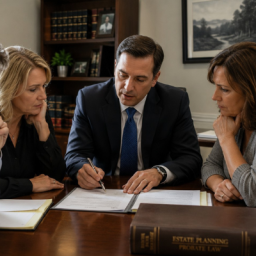
Most people assume estate planning is something to figure out later, after the kids are grown, when things settle down, or after things are a little less complicated. The problem is that “later” has a way of never arriving, and the families who wait the longest are often the ones left to deal with probate courts, inheritance disputes, and months of legal delays when they can least afford them.
If you own property, have children, run a business, or simply want your wishes respected after you are gone, the right time to work with an estate planning lawyer is now. Not because the process is urgent, but because a good plan, built carefully, gives your family something genuinely valuable: certainty.
What Does an Estate Planning Lawyer Do?
An estate planning attorney does more than fill out forms. They help you think through questions most people avoid, translate your intentions into legally enforceable documents, and build a structure that holds up long after the meeting is over.
The core of that work typically includes
- Wills and trusts planning designed around your specific family situation
- Probate avoidance strategies that keep asset transfers private and efficient
- Estate tax planning to protect more of what you have worked to accumulate
- Inheritance planning services are structured to reduce the chance of family conflict
- Full compliance with Washington State probate and estate laws
One statistic that surprises most people: according to the U.S. Census Bureau, nearly 60% of American adults do not have a will. Without one, state law decides how your assets are divided. That means a judge, not you, makes the call.
The Role of a Lawyer in Creating a Will
A will is the foundation of any estate plan, but its value depends entirely on how it is written. Vague language, missing designations, and documents that have not been updated in years are the three most common reasons wills fail to do what families expected them to do.
1. Clearly Defining Asset Distribution
The goal of a well-drafted will is to leave nothing open to interpretation. That means naming specific accounts, properties, and valuables, not just gesturing at general categories. When instructions are precise, disputes are far less likely to take hold.
Quick Tip: Rather than writing “split my assets among my children,” name each asset and each recipient explicitly. Specificity is what makes a will enforceable.
2. Appointing Executors and Key Decision-Makers
The executor of your estate manages a significant amount of legal and financial responsibility. An estate lawyer for wills and trusts can help you identify the right person for this role and make sure the appointment is clearly documented.
3. Naming Guardians for Minor Children
For many parents, this is the most important decision in the entire document. Without a legally designated guardian, a court makes that choice. Proper legal drafting ensures your preference is on record and enforceable.
4. Reducing the Risk of Will Contests
Contested wills are more common than most people realize. The American Bar Association has noted that disputed estates can take significantly longer to settle and cost considerably more in legal fees. A properly executed will, drafted with current laws in mind, is a much harder document to challenge.
5. Updating and Revising Your Will Over Time
The will you wrote five years ago may not reflect your life today. Major changes, including marriage, divorce, new children, business interests, or shifts in your financial picture, all create valid reasons to revisit. Understanding when you should update your estate plan is part of working with a good attorney over time, not just once.
How Trusts Help in Estate Planning
Trusts often get treated as something only wealthy families need. That is a misconception. Trusts offer practical advantages for a wide range of families, particularly in avoiding probate, maintaining privacy, and protecting assets from external risks.
1. Understanding Revocable vs Irrevocable Trusts
The most important distinction between revocable and irrevocable trust structures is the trade-off between flexibility and protection. Here is a direct comparison:
| Trust Type | Can Be Changed? | Avoids Probate? | Protects from Creditors? |
| Revocable Trust | Yes, at any time | Yes | Limited protection |
| Irrevocable Trust | Generally no | Yes | Strong protection |
2. Avoiding Probate Through Trust Structures
Probate is the court-supervised process of validating a will and distributing an estate. It is time-consuming, expensive, and entirely public. The U.S. Courts have noted that probate proceedings can take months or even years, depending on the estate’s complexity.
Knowing how to avoid probate with a trust is one of the most straightforward reasons families choose trust-based planning. Assets held in a properly funded trust transfer to beneficiaries without court involvement, which keeps the process both faster and more private.
3. Protecting Assets from Creditors and Risks
Certain irrevocable trust structures provide real protection against creditors, legal judgments, or beneficiaries who may not be equipped to manage a large inheritance responsibly. This is especially relevant for estate planning for business owners or families with significant real estate holdings.
4. Maintaining Privacy in Asset Distribution
A will becomes public record upon admission to probate. A trust does not. For families in Bainbridge Island, Bremerton, Port Orchard, and across Kitsap County who value discretion in financial matters, this distinction alone is often worth the planning effort.
5. Managing Wealth for Future Generations
Trusts can be written to distribute assets gradually rather than all at once. Common approaches include:
- Education-tied provisions that release funds upon school enrollment
- Age-based distributions at 25, 30, or 35
- Business succession terms built directly into the trust structure
Managing Inheritance Distribution Effectively
Even the most carefully planned estate can run into trouble during execution. Asset distribution planning is where legal preparation meets real family dynamics, and having clear documentation in place makes a measurable difference in how smoothly the process goes.
1. Creating a Clear and Fair Distribution Plan
An inheritance distribution lawyer helps translate personal intentions into enforceable legal language. Fair distribution does not always mean equal distribution, and a skilled attorney can help structure a plan that reflects the full context of your family’s situation without leaving room for misinterpretation.
2. Minimizing Family Conflicts and Disputes
The majority of inheritance disputes are not really about the money. They stem from unclear instructions, perceived unfairness, or family members being left out of the conversation. A detailed, well-documented plan addresses most of those issues before they become legal problems.
Worth Knowing: Most inheritance conflicts arise not from unfair distribution, but from unclear instructions. Getting the language right is often the most important thing a lawyer does.
3. Reducing Estate Taxes and Legal Costs
Thoughtful estate tax planning can meaningfully reduce the portion of your estate consumed by taxes and legal fees. The IRS adjusts estate tax thresholds periodically, which is one reason professional guidance is valuable not just at the time of drafting but on an ongoing basis.
4. Handling Complex Assets Like Property and Businesses
Real estate portfolios, business ownership stakes, and investment accounts each require specific handling. Without proper legal structure, these assets can trigger valuation disputes, operational disruptions, or unintended tax consequences that complicate an otherwise straightforward estate. This is where legal help for estate planning carries the most practical value.
5. Ensuring Timely and Efficient Asset Transfer
A well-structured estate plan does not just protect assets. It moves them efficiently. Beneficiaries receive what they are entitled to without unnecessary delays, court appearances, or administrative confusion that can stretch on for months.
When Should You Hire an Estate Planning Lawyer?
The question Do I need a lawyer for a will or trust comes up often. The short answer is: if any of the following situations apply to you, the answer is yes.
- You own real property or significant financial accounts
- You have children under eighteen and have not named a legal guardian
- You own or have a stake in a business
- Probate avoidance strategies are a priority for your family
- Your family includes blended relationships, prior marriages, or complex circumstances
- You have not reviewed your existing documents in three or more years
Good estate planning is not reactive. It is one of the more proactive things a family can do, and the earlier it happens, the more options you have.
Tips for Choosing the Right Estate Planning Lawyer
The attorney you choose will have a hand in decisions that affect your family for years. Here is what to look for in that search:
- Proven experience in inheritance planning services and trust administration
- Working knowledge of Washington State probate and estate law
- The ability to explain complex concepts in plain, direct language
- Experience handling both straightforward wills and multi-asset estate structures
- Clear, upfront communication about the cost of hiring an estate planning attorney
A few questions worth asking before you commit
- How do you approach estate planning for business owners with multiple asset types?
- What does your process look like for updating plans over time?
- Do you handle probate if it becomes necessary?
Use the table below as a practical reference for when you should update your estate plan
| When This Happens… | Update Your Estate Plan By… |
| Marriage or divorce | Revising beneficiaries and guardianship designations |
| Birth or adoption of a child | Adding guardian provisions, updating distributions |
| Death of a named executor or trustee | Appointing a qualified replacement |
| Major asset changes | Retitling property, updating account ownership |
| Moving to a different state | Confirming document compliance with local laws |
| Significant changes in tax law | Reviewing your strategy with your attorney |
Your Legacy Deserves a Plan That Holds
Estate planning is not a one-time task. It is a commitment to ensuring the people you care about are not left to navigate legal complexity during an already difficult time. A clear plan, revisited as life changes, is one of the more lasting things you can do for your family.
Lindsay and Lindsay Attorneys at Law have been helping families across Bainbridge Island, Port Orchard, Bremerton, Kingston, Poulsbo, and Kitsap County build estate plans that stand up to real-world scrutiny for decades. Our work covers wills, trusts, guardianships, and probate matters, with a consistent focus on keeping clients informed, respected, and well-represented throughout the process.
If you are ready to put a proper plan in place, reach out to our estate planning lawyers at (360) 876-7601 to schedule a consultation. The sooner the plan is in place, the more peace of mind it provides.